
Safety of Infants and Small Children
Protecting Infants
An infant must be properly restrained in a rear-facing child seat until the infant reaches the seat manufacturer’s weight or height limit for the seat.
Positioning a rear-facing child seat
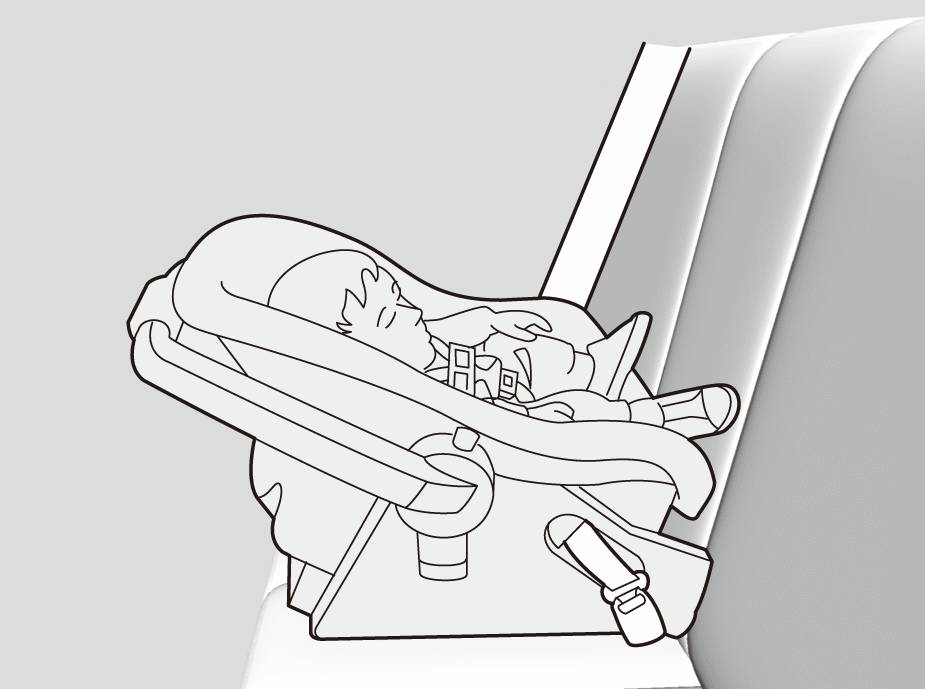
Child seats must be placed and secured in a rear seating position.
Experts recommend use of a rear-facing seat for a child so long as the child’s height and weight are appropriate for a rear-facing seat.
Infants should never be seated in a forward-facing position.
Always refer to the child seat manufacturer’s instructions before installation.
Do not allow a front seat to rest against a child seat installed in a rear seating position.
The weight sensor in the front seat may not correctly detect the actual weight of the occupant.
When properly installed, a rear-facing child seat may prevent the driver or a front passenger from moving their seat all the way back, or from locking their seat-back in the desired position. Make sure that there is no contact between the child seat and the seat in front of it.
It can also interfere with proper operation of the passenger’s advanced front airbag system.
If this occurs, we recommend that you install the child seat directly behind the front passenger’s seat, move the seat as far forward as needed, and leave it unoccupied. Or, you may wish to get a smaller rear-facing child seat.
 WARNING
Placing a rear-facing child seat in the front seat can result in serious injury or death during a crash.
Always place a rear-facing child seat in the rear seat, not the front.
Protecting Smaller Children
If a child has exceeded the weight and height limitations of a rear-facing child seat, the child should be properly restrained in a firmly secured forward-facing child seat until they exceed the weight and height limitations for the forward-facing child seat.
Educate yourself about the laws and regulations regarding child seat use where you are driving, and follow the child seat manufacturer’s instructions.
Forward-facing child seat placement
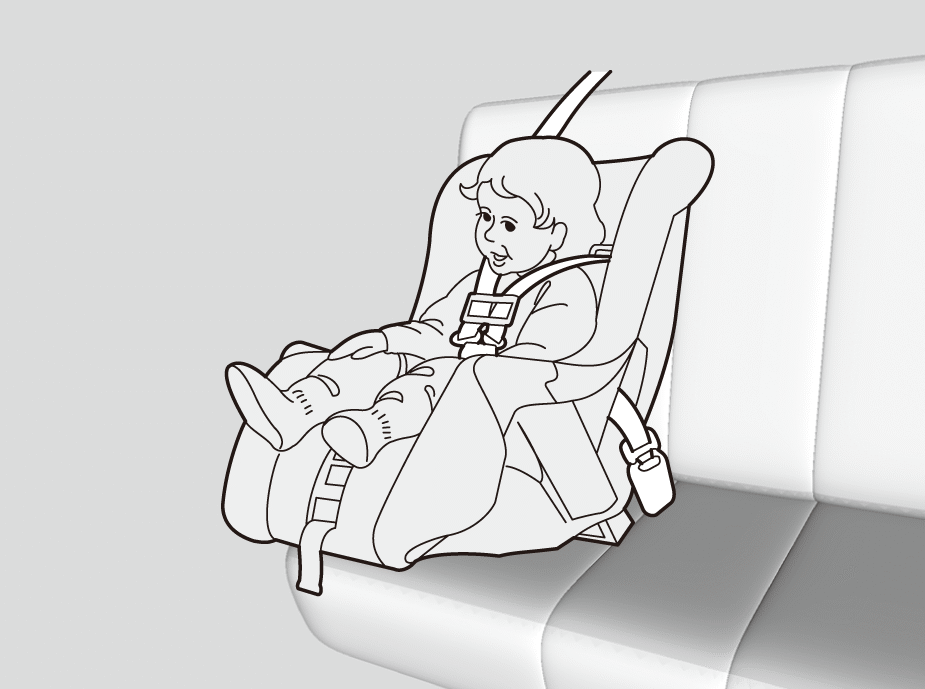
We strongly recommend placing a forward-facing child seat in a rear seating position.
Placing a forward-facing child seat in the front seat can be hazardous, even with advanced front airbags that automatically turn the passenger’s front airbag off. A rear seat is the safest place for a child.
WARNING
Placing a forward-facing child seat in the front seat can result in serious injury or death if the front airbag inflates.
If you must place a forward-facing child seat in front, move the vehicle seat as far back as possible, and properly restrain the child.
Selecting a Child Seat
Most child seats are LATCH-compatible (Lower Anchors and Tethers for Children). Some have a rigid-type connector while others have a flexible-type connector. Both are equally easy to use. Some existing and previously owned child seats can only be installed using the seat belt. Whichever type you choose, follow the child seat manufacturer’s use and care instructions including recommended expiration dates as well as the instructions in this manual. Proper installation is key to maximizing your child’s safety.
In seating positions and vehicles not equipped with LATCH, a LATCH-compatible child seat can be installed using the seat belt and a top tether for added security. This is because all child seats are required to be designed so that they can be secured with a lap belt or the lap part of a lap/shoulder belt. In addition, the child seat manufacturer may advise that a seat belt be used to attach a LATCH-compatible seat once a child reaches a specified weight. Please read the child seat owner’s manual for proper installation instructions.
Important consideration when selecting a child seat
- The child seat is the correct type and size for the child.
- The child seat is the correct type for the seating position.
- The child seat is compliant with Federal Motor Vehicle Safety Standard 213 or Canadian Motor Vehicle Safety Standard 213.
LATCH-compatible child seats have been developed to simplify the installation process and reduce the likelihood of injuries caused by incorrect installation.