
Changing a Flat Tire
If a tire goes flat while driving, grasp the steering wheel firmly and brake gradually to reduce speed. Then, stop in a safe place. Replace the flat tire with a spare tire. Go to a dealer as soon as possible to have the regular tire repaired or replaced.
- Park the vehicle on a firm, level, non-slippery surface and apply the parking brake.
- Put the transmission into P.
- Turn on the hazard warning lights and set the power mode to VEHICLE OFF.
Follow compact spare precautions: Periodically check the tire pressure of the compact spare. It should be set to the specified pressure. Specified Pressure: 60 psi (420 kPa, 4.2 kgf/cm2)
When driving with the compact spare tire, keep the vehicle speed under 50 mph (80 km/h). Replace with a regular tire as soon as possible.
The compact spare tire and wheel in your vehicle are specifically for this model. Do not use them with another vehicle. Do not use another type of compact spare tire or wheel with your vehicle.
Do not mount tire chains on a compact spare tire. If a chain-mounted front tire goes flat, remove one of the regular rear tires and replace it with the compact spare tire. Remove the flat front tire and replace it with the regular tire that was removed from the rear. Mount the tire chains on the front tire.

Getting Ready to Replace the Flat Tire
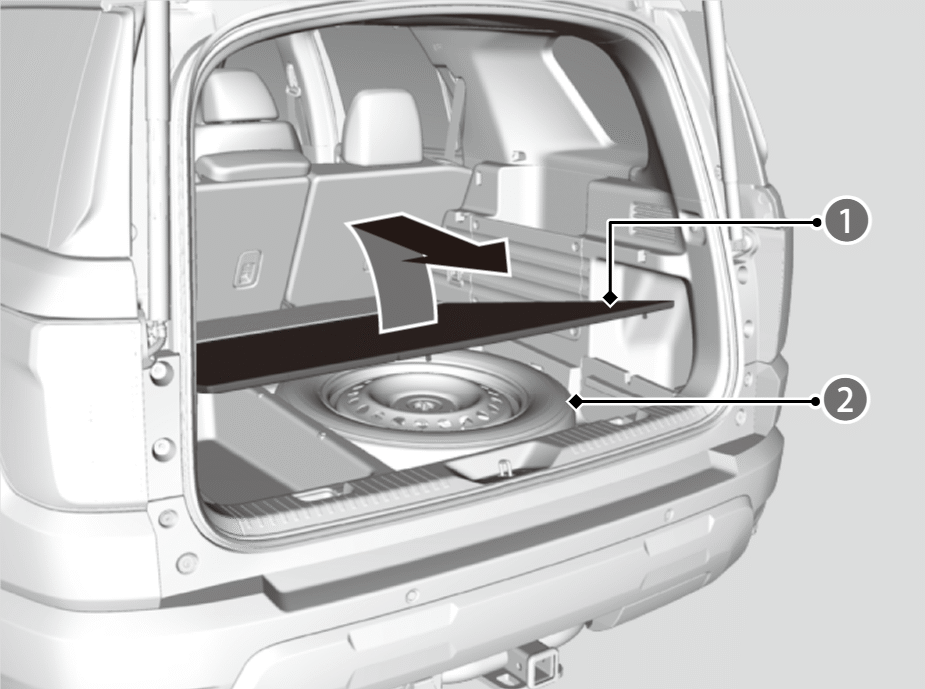

Floor Lid

Compact Spare Tire
- Remove the floor lid.
- Unscrew the wing bolt, and remove the spacer cone. Then, remove the compact spare tire.
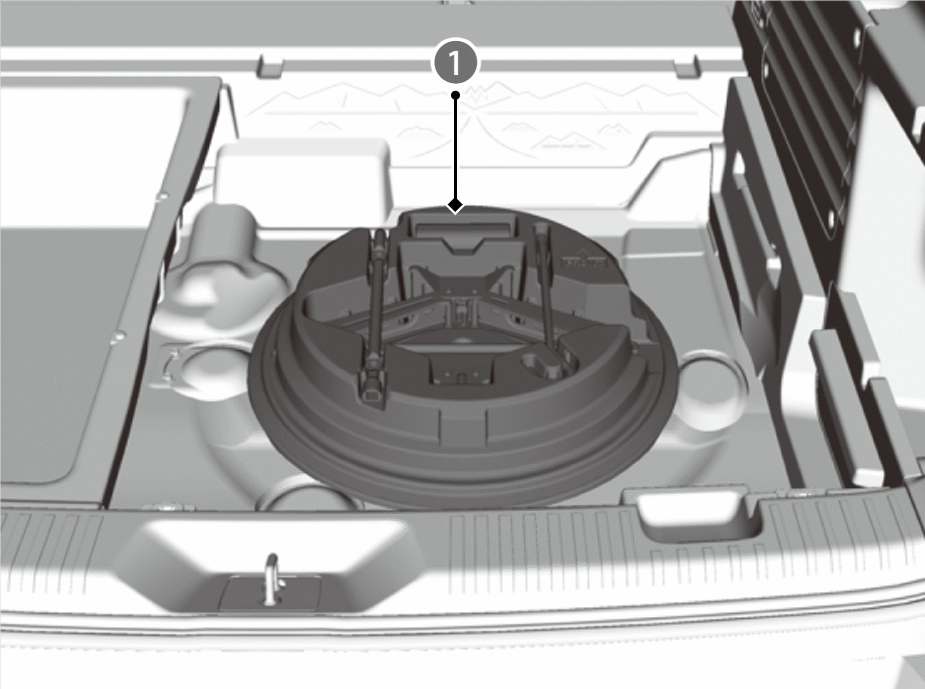
Tool Case
- Take the tool case out of the cargo area.
- Take the jack, wheel nut wrench, jack handle bar, and tire strap/tire storage bag out of the tool case.
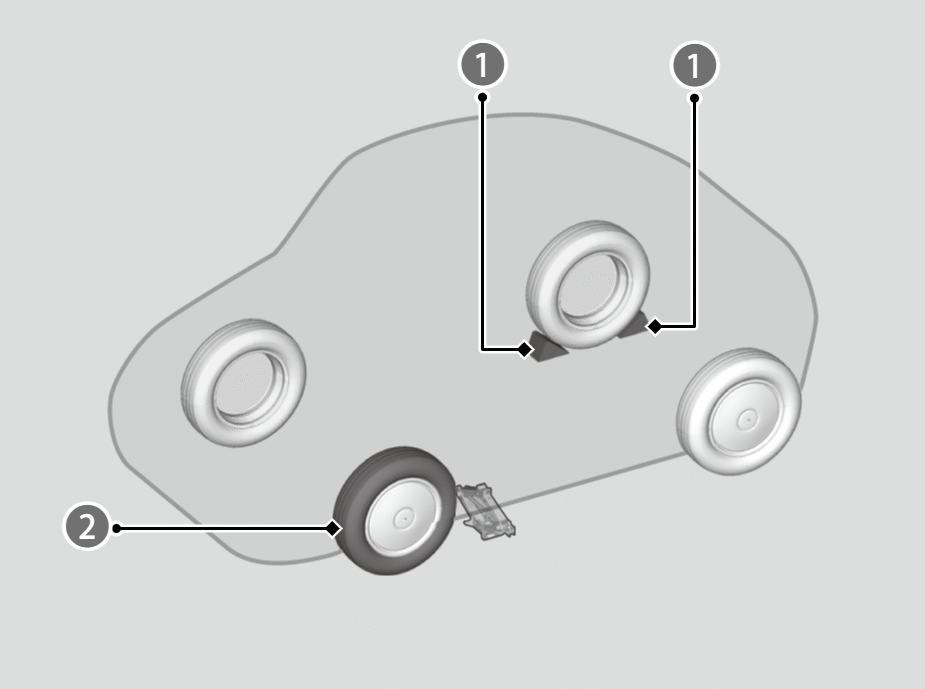
Wheel Blocks
The tire to be replaced.
- Place a wheel block or rock in front and rear of the wheel diagonal to the flat tire.
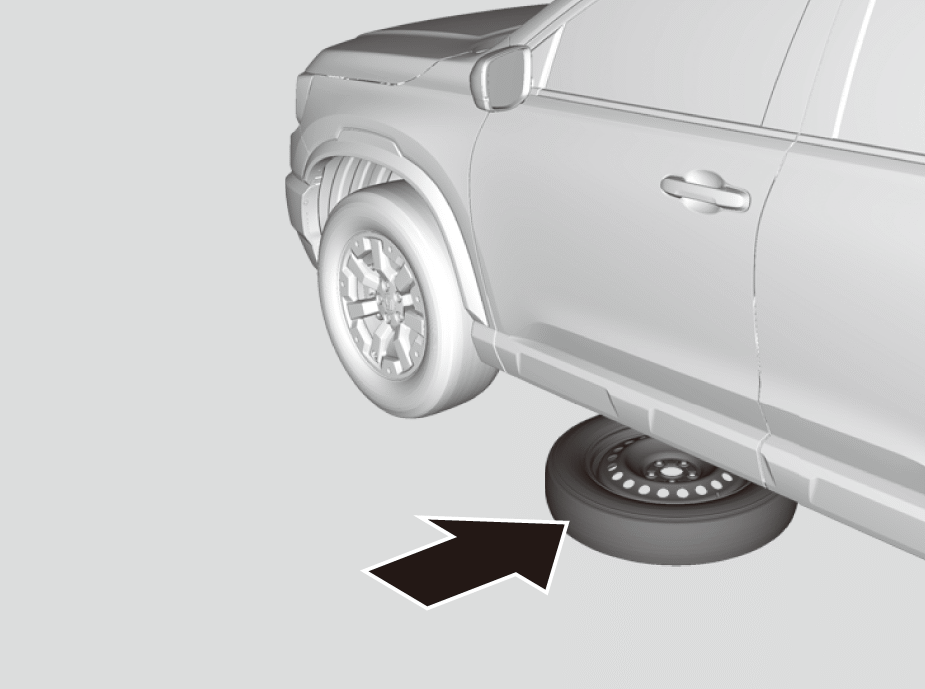
- Place the compact spare tire (wheel side up) under the vehicle body, near the tire that needs to be replaced.
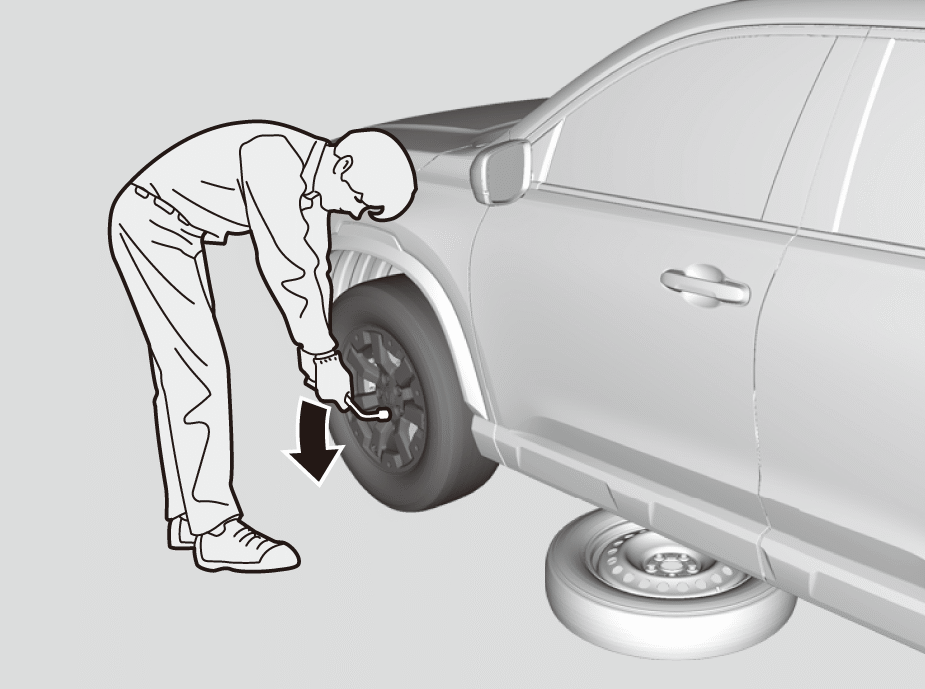
- Loosen each wheel nut about one turn using the wheel nut wrench.
How to Set Up the Jack
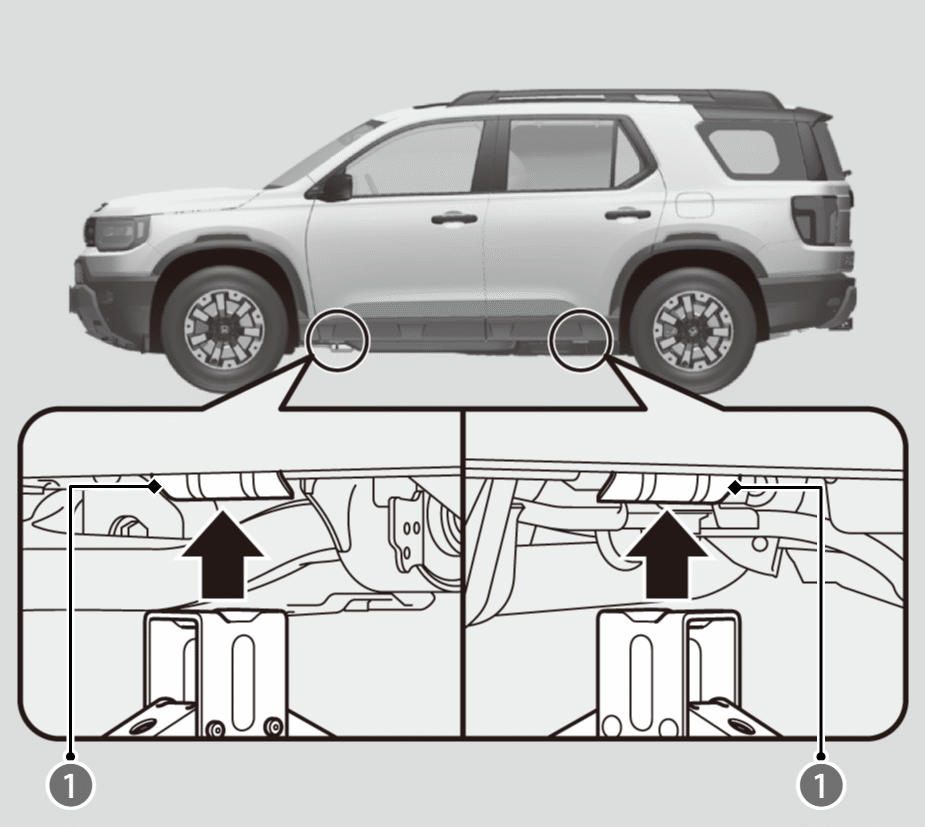
Jacking Points
- Place the jack under the jacking point closest to the tire to be changed.
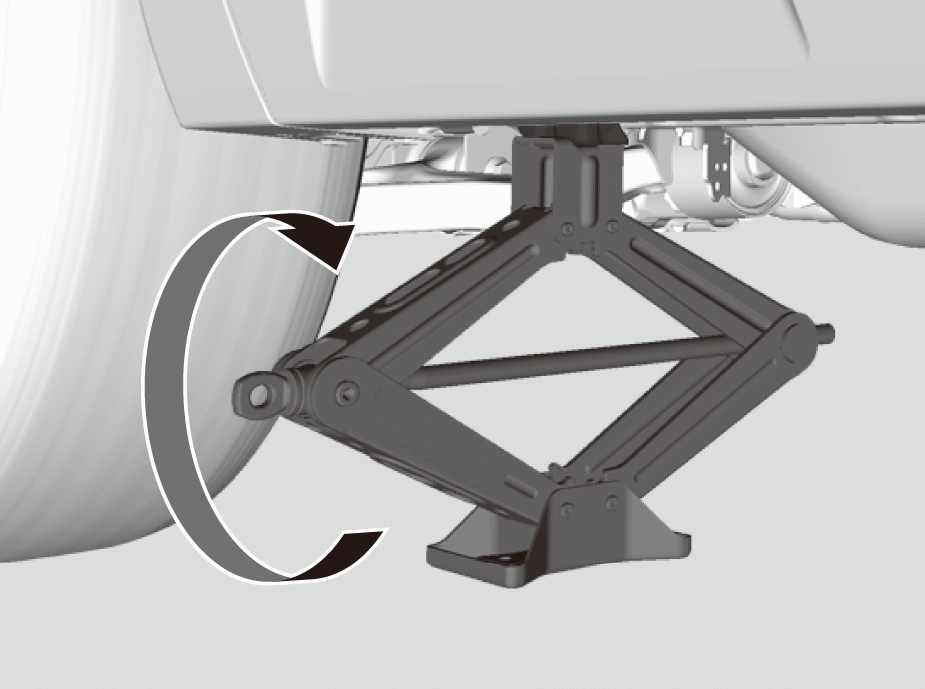
- Turn the end bracket clockwise as shown in the image until the top of the jack contacts the jacking point.
- Make sure that the jacking point tab is resting in the jack notch.
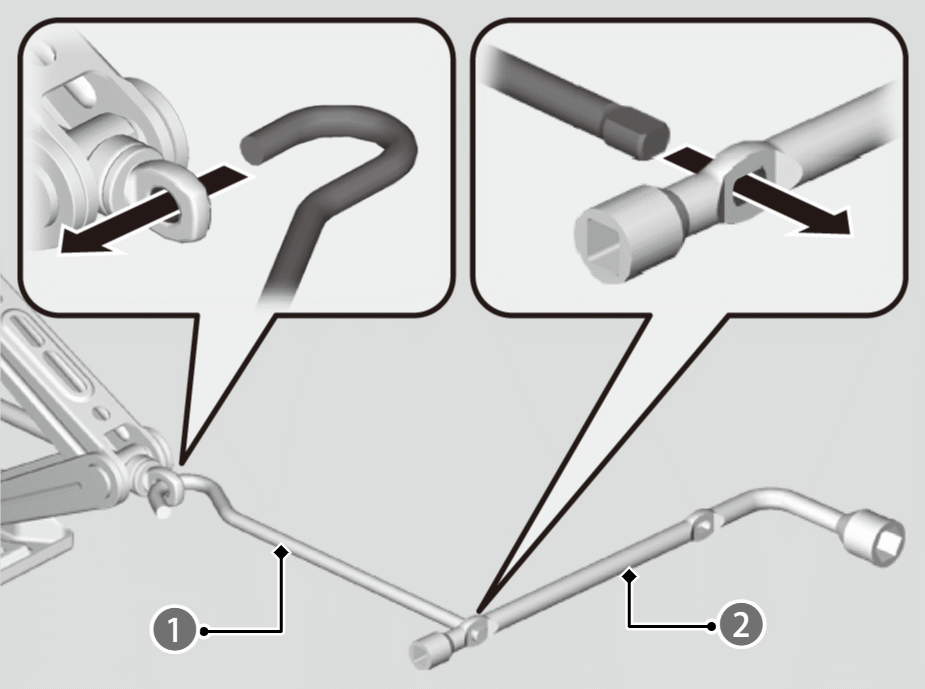
Jack Handle Bar
Wheel Nut Wrench as Jack Handle
- Raise the vehicle, using the jack handle bar and the jack handle, until the tire is off the ground.
 WARNING
The vehicle can easily roll off the jack, seriously injuring anyone underneath. Follow the directions for changing a tire exactly, and never get under the vehicle when it is supported only by the jack.
Do not use the jack with people or luggage in the vehicle.
 CAUTION
The following instructions must be followed to use the jack safely:
- Do not use while the engine is running.
- Use only where the ground is firm and level.
- Use only at the jacking points.
- Do not get in the vehicle while using the jack.
- Do not put anything on top of or underneath the jack.
Replacing the Flat Tire
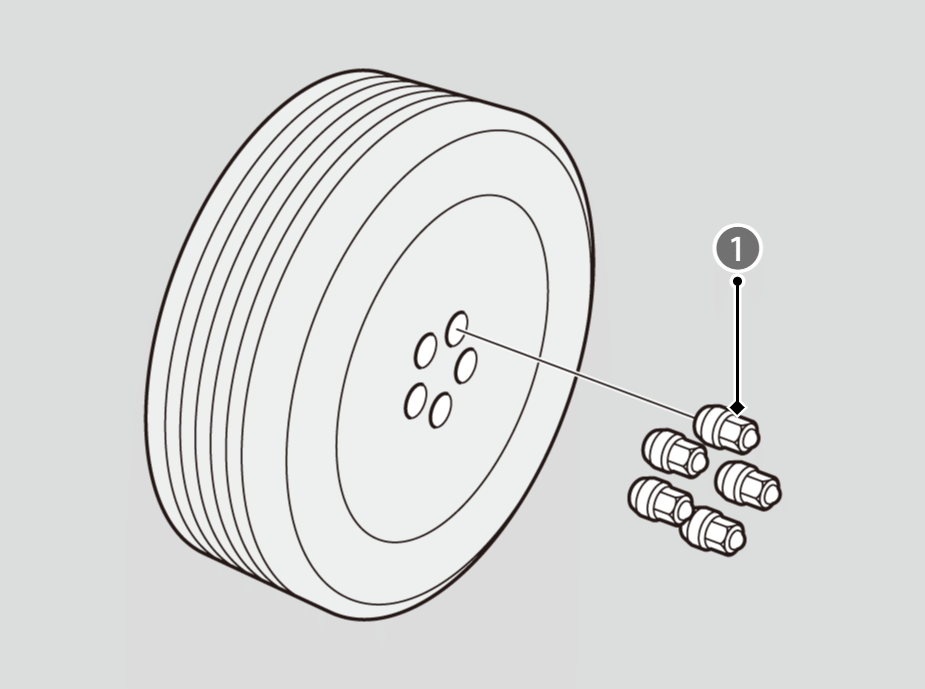
Wheel Nut
- Remove the wheel nuts and flat tire.
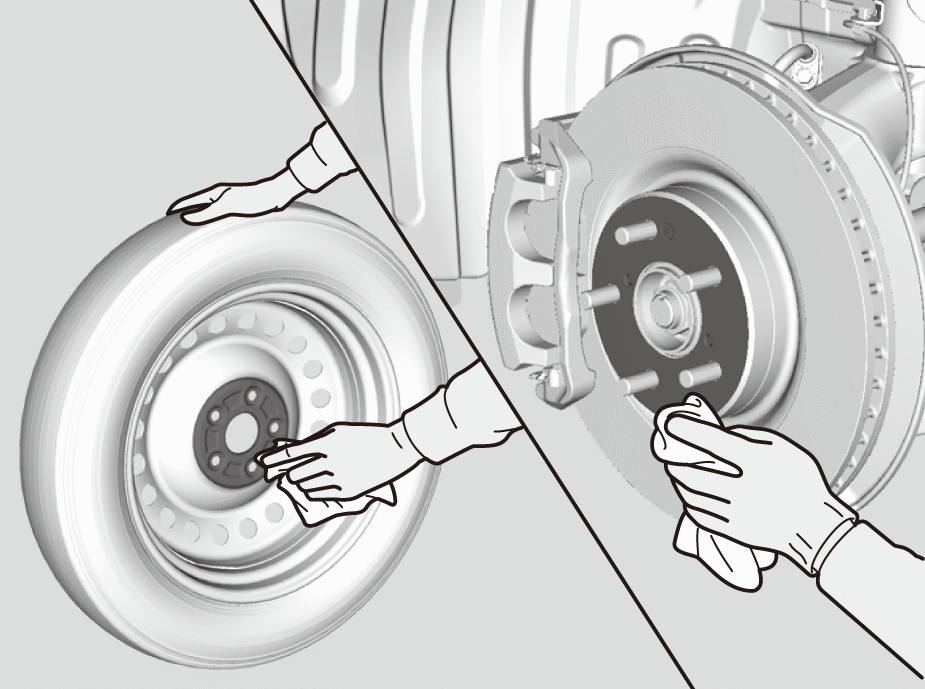
- Wipe the mounting surfaces of the wheel with a clean cloth.
- Mount the compact spare tire.
- Screw the wheel nuts until they touch the lips around the mounting holes, then stop rotating.
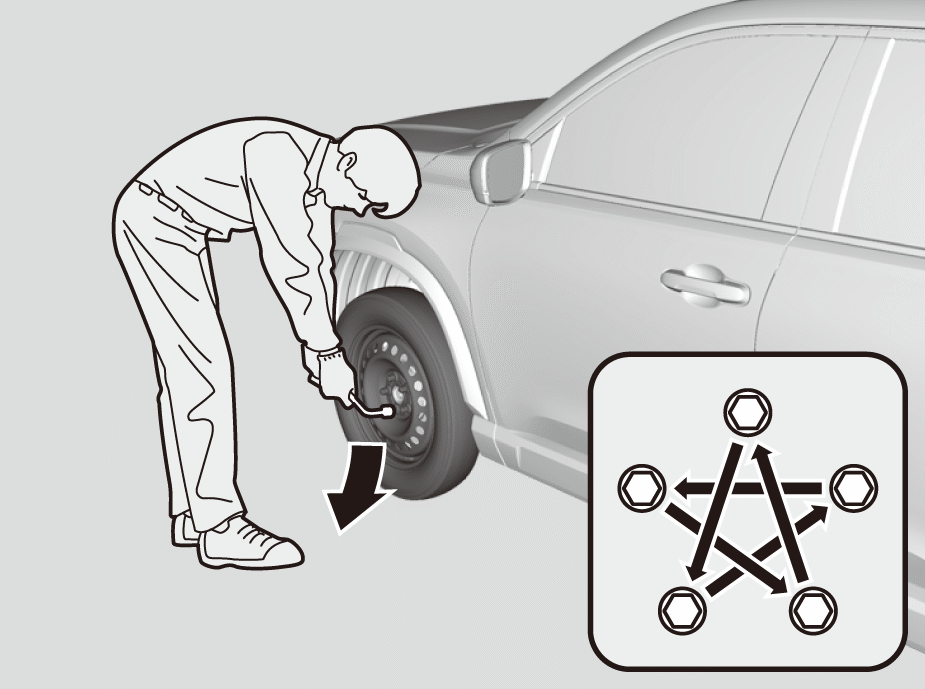
- Lower the vehicle and remove the jack. Tighten the wheel nuts in the order indicated in the image. Go around tightening the nuts two to three times in this order. Wheel nut torque: 94 lbf∙ft (127 N∙m, 13 kgf∙m)
Do not over tighten the wheel nuts by applying extra torque using your foot or a pipe.
Storing the Flat Tire
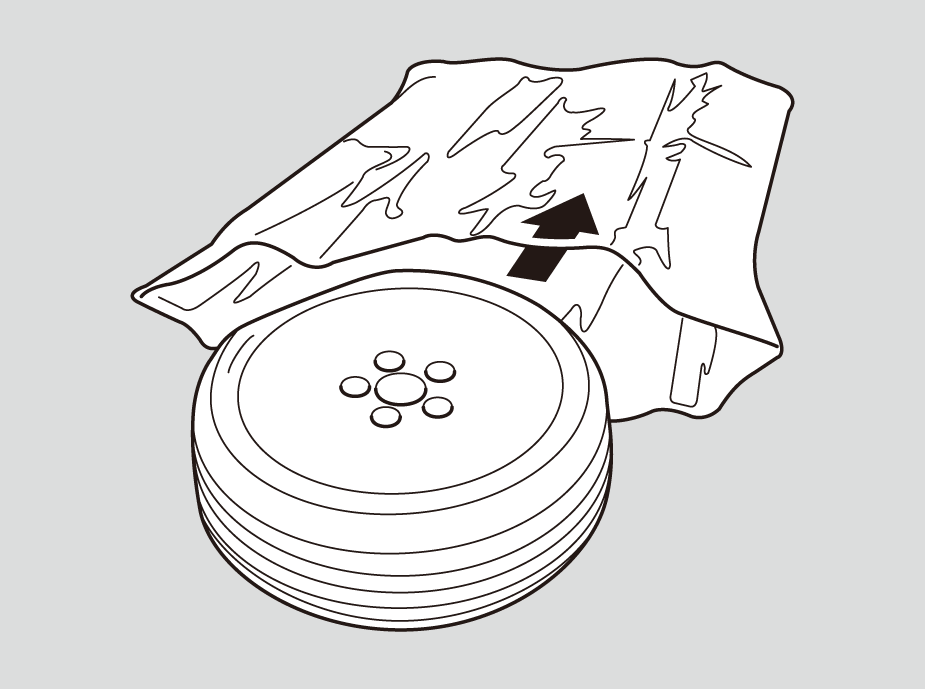
- Put the flat tire in the tire storage bag provided with your vehicle.
- The tire storage bag is in the tool case.
- Knot the top of the tire storage bag.
- Securely put the jack, wheel nut wrench, jack handle bar, and box wrench back in the tool case.
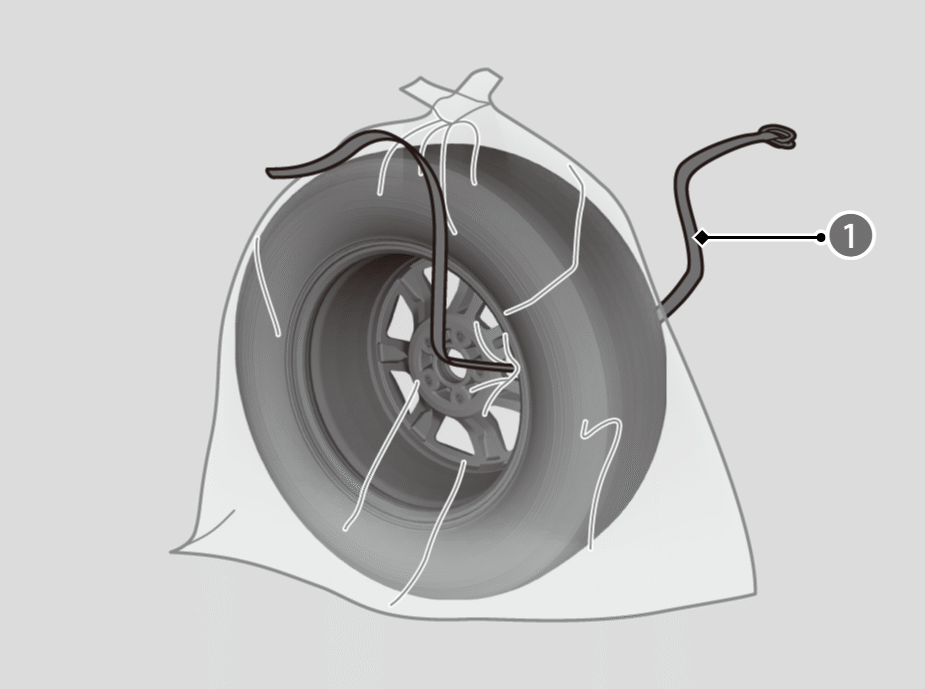
Belt
- Bore through the bag, and pass the holding belt through the hole of the bag and the wheel of the flat tire as shown.
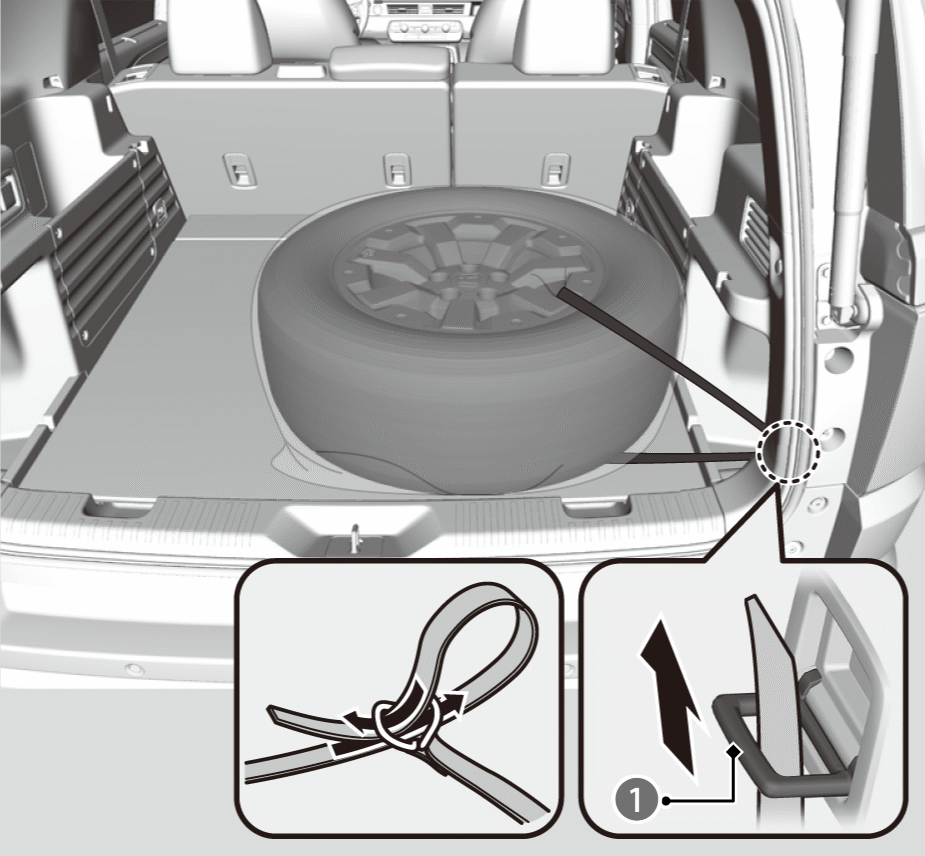
Rear Anchor
- Place the flat tire in the cargo area, and thread the belt through the rear anchor as shown.
- Pass the belt through the ring, and tighten the belt to secure the flat tire in place.
WARNING
Loose items can fly around the interior in a crash and can seriously injure the occupants. Store the wheel, jack, and tools securely before driving.
TPMS and the Compact Spare Tire
If you replace a flat tire with the compact spare tire, the low tire pressure/TPMS indicator will come on while you are driving. After driving for a few miles (kilometers), the Tire pressure monitor system problem. Check tire pressure. See your dealer. message will appear on the driver information interface and the indicator will start blinking for a short time and then stay on; however, this is normal and is no cause for concern.
If you replace the tire with a genuine tire equipped with low tire pressure/TPMS sensor, the warning message on the driver information interface and the low tire pressure/TPMS indicator will go off after a few miles (kilometers).
The system cannot monitor the pressure of the compact spare tire. Manually check the compact spare tire pressure to be sure that it is correct.