
How the System Works
Assistive Braking
Assistive braking provides a visual and audible alert when the vehicle is moving between approximately 1 and 6 mph (2 and 10 km/h) and there is the possibility of a collision with a detected wall or other obstacles, as well as providing assistance with braking.
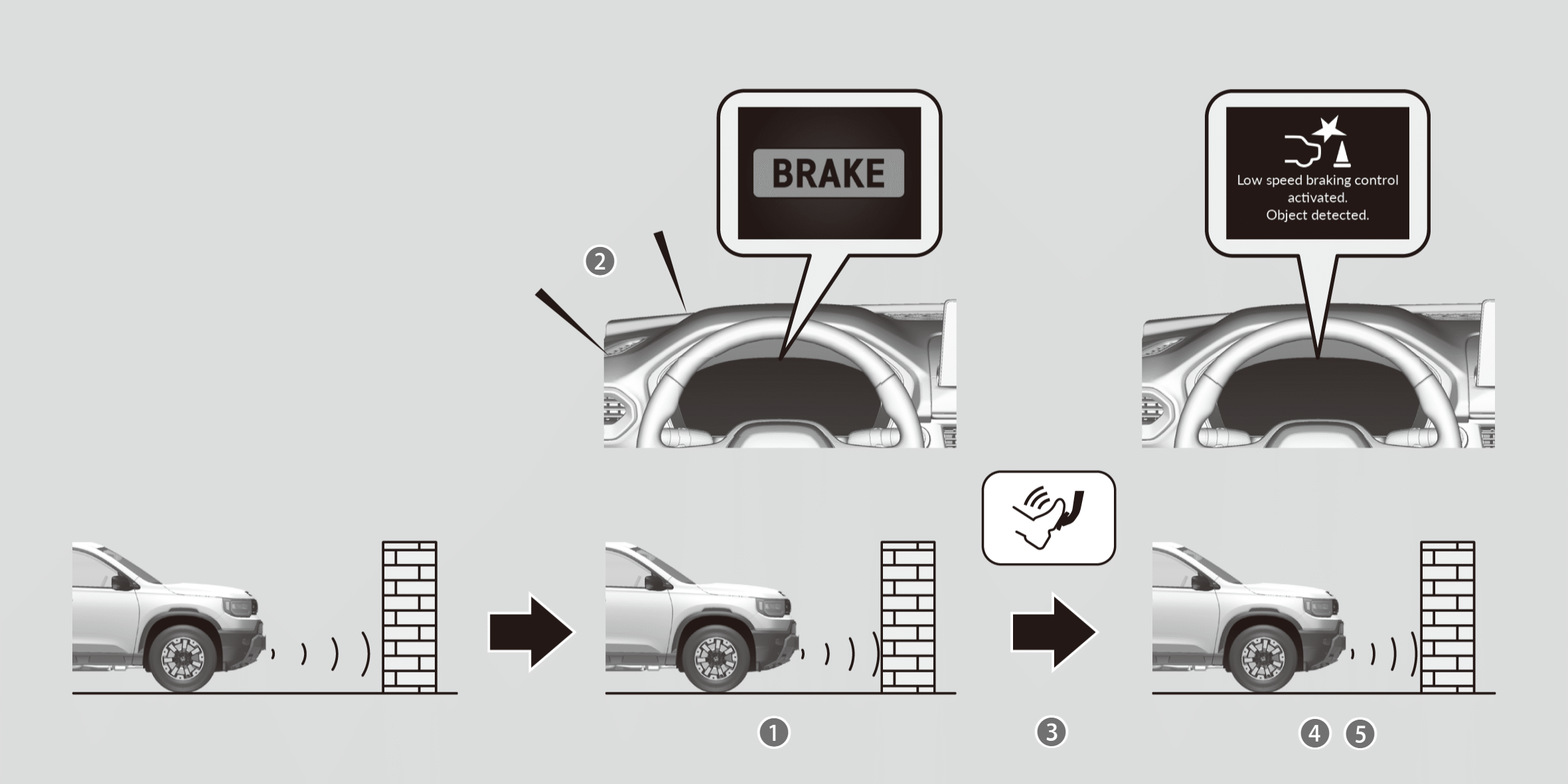

The vehicle applies brake

Audible Alert

Driver depresses brake pedal

Stop

Release brake after maintaining stationary position

If only the rear parking sensors are turned off, the assistive braking will not work when reversing.
Assistive Driving Power Suppression
When the vehicle is stopped or moving at less than 6 mph (10 km/h) and there is an obstacle such as a wall detected near the front or back of the vehicle, if the accelerator pedal is depressed more than necessary, the system will inform you with a visual and audible alert. At the same time, the system will prevent sudden forward or backwards movement by limiting the output of the engine, then assistive braking will activate when you get closer to the obstacle.
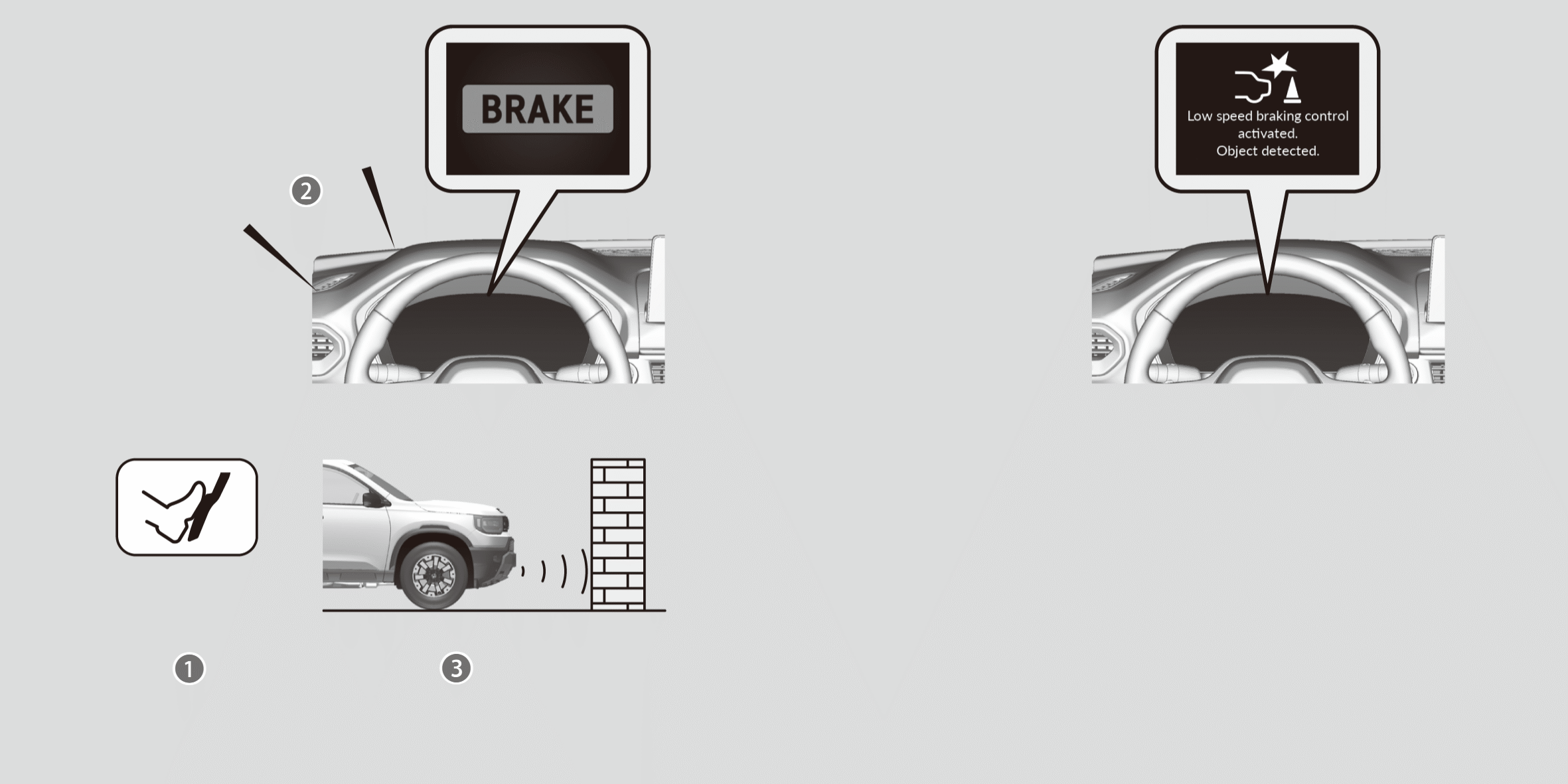
Accidental depression of the accelerator
Audible Alert
Limiting the output of the engine
Assistive driving power suppression will not activate in the following situations.
When moving forward: When on a steep slope or the shift position is in P, R, or N.
When reversing: When on a steep slope or the shift position is in a position other than R.
If only the rear sensors are turned off, the assistive driving power suppression will not work when reversing.
Conditions for Cancellation
Conditions for assistive driving power suppression:
- When the accelerator is no longer depressed.
- When the accelerator is depressed for approximately four seconds.
- When the brake pedal is depressed.
Conditions for assistive braking cancellation:
- A certain amount of time has passed since activation.