Handling the Unexpected

Learn about what to do in critical or emergency situations.

Smart Entry Remote*1 Battery Strength

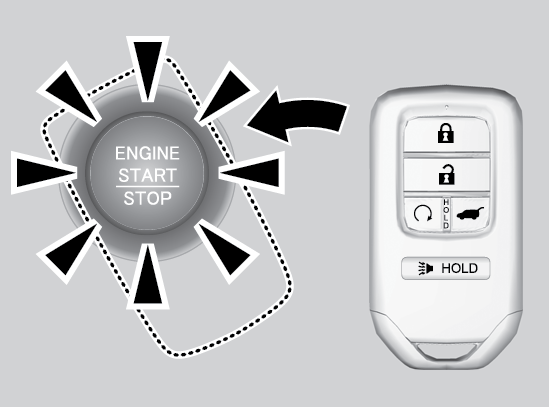
If the battery life in your remote transmitter is weak, a message appears in the Multi-Information Display (MID) with information on how to start the engine.

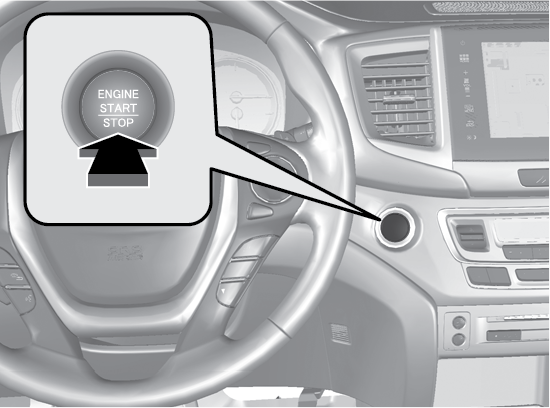
  1. Touch the back of the remote transmitter to the ENGINE START/STOP button while the indicator is flashing.
  2. With the brake pedal or clutch pedal pressed, press the ENGINE START/STOP button within 10 seconds.

Shift Lever Does Not Move

Follow the procedure below if you cannot move the shift lever out of Park (P).

  1. Set the parking brake.
  2. Remove the built-in key from the remote transmitter.
  3. Open the lid of the console compartment.
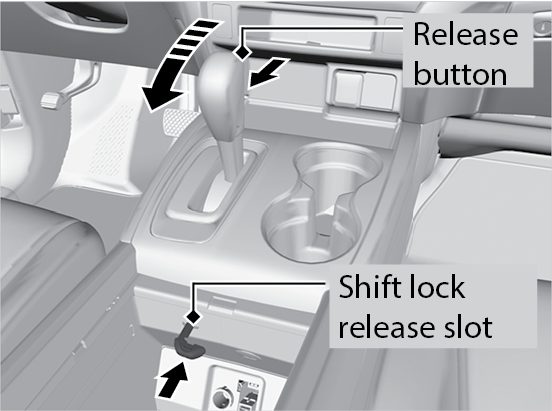
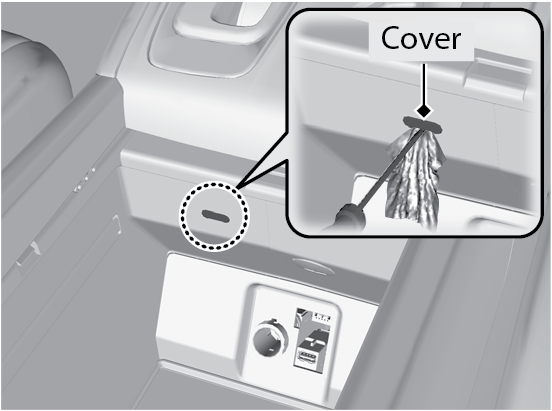
  4. Wrap a cloth around the tip of a small flat-tip screwdriver. Put it into the shift lock release slot as shown in the image, and remove the cover.
  5. Insert the key into the shift lock release slot.
  6. While pushing the key down, press the shift lever release button and place the shift lever into Neutral (N). The lock is now released. Have the shift lever checked by a dealer as soon as possible.

Jump Starting

Turn off the power to electric devices, such as audio and lights. Turn off the engine, then open the hood.

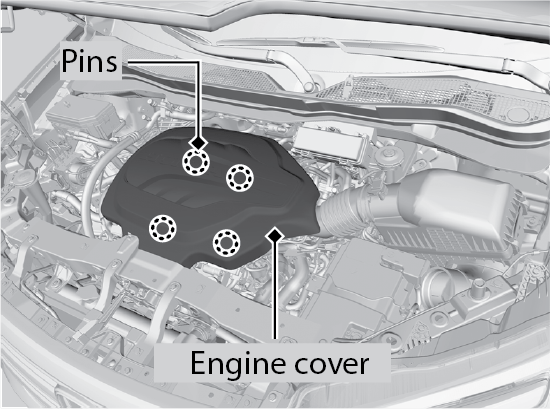
  1. Remove the engine compartment cover.
  2. Connect the first jumper cable to your vehicle's battery (+) terminal.
  3. Connect the other end of the first jumper cable to the booster battery (+) terminal. Use a 12-volt booster battery only.
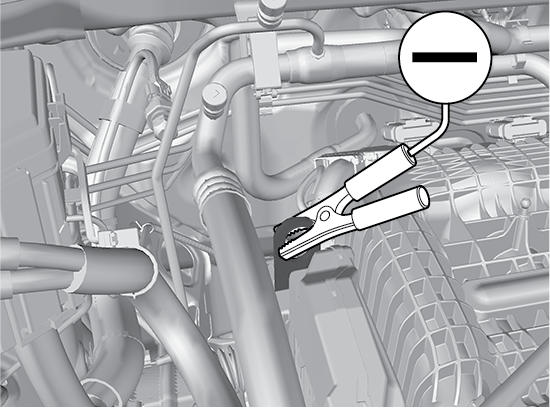
  4. Connect the second jumper cable to the booster battery (-) terminal.
  5. Connect the other end of the second jumper cable to the engine hanger as shown. Do not connect this jumper cable to any other part.
  6. If your vehicle is connected to another vehicle, start the assisting vehicle's engine and increase its rpm slightly.
  7. Attempt to start your vehicle's engine. If it turns over slowly, make sure that the jumper cables have good metal-to-metal contact.

WARNING: Battery posts, terminals, and related accessories contain lead and lead compounds. Wash your hands after handling.

W
A battery can explode if you do not follow the correct procedure, seriously injuring anyone nearby. Keep all sparks, open flames, and smoking materials away from the battery.

Overheating

If the temperature gauge needle is at the H mark, the engine suddenly loses power, or steam or spray comes out from under the hood, your engine is overheating.

  1. Immediately park the vehicle in a safe place. Turn off all accessories and turn on the hazard warning lights.
  2. If steam or spray is not present: Keep the engine running and open the hood.

    If steam or spray is present: Turn off the engine and wait until it subsides. Then, open the hood.

  3. Check that the cooling fan is operating and stop the engine once the temperature gauge needle goes down. If the cooling fan is not operating, immediately stop the engine.
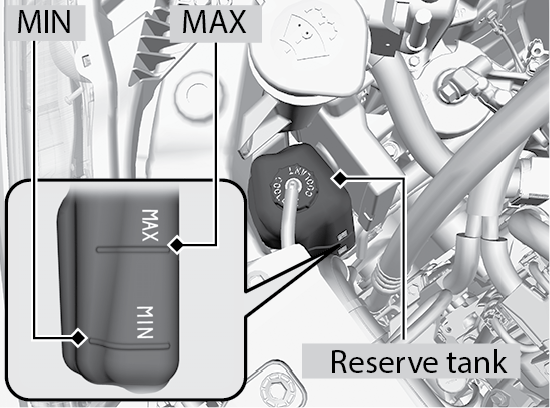
  4. Once the engine has cooled down, inspect the coolant level and check the cooling system components for leaks. If the coolant level in the reserve tank is low, add coolant until it reaches the MAX mark. If there is no coolant in the reserve tank, make sure the radiator is cool, then cover the radiator cap with a heavy cloth and open the cap. If necessary, add coolant up to the base of the filler neck, and put the cap back on.

Once the engine has cooled sufficiently, restart it and check the temperature gauge. If the temperature needle has gone down, resume driving. If it has not gone down, contact a dealer for repairs.

W
Steam and spray from an overheated engine can seriously scald you.

Do not open the hood if steam is coming out.

W
Removing the radiator cap while the engine is hot can cause the coolant to spray out, seriously scalding you.

Always let the engine and radiator cool down before removing the radiator cap.

Notice Continuing to drive with the temperature gauge needle at the H mark may damage the engine.

Emergency Engine Stop

The ENGINE START/STOP button may be used to stop the engine due to an emergency situation even while driving. If you must stop the engine, choose one of the following operations:
  • Press and hold the ENGINE START/STOP button for two seconds, or
  • Firmly press the ENGINE START/STOP button three times.

The steering wheel will not lock. The power mode changes to ACCESSORY, unless the shift lever is in Park (P), in which case the power mode changes to VEHICLE OFF.

Because turning off the engine also disables the power assist the engine provides to the steering and braking systems, it will require significantly more physical effort and time to steer and slow the vehicle. Downshift gears and use both feet on the brake pedal, if necessary, to slow the vehicle and stop immediately in a safe place.

Notice Do not press the button while driving unless it is absolutely necessary for the engine to be switched off.

Emergency Towing

Call a professional towing service if you need to tow your vehicle.

All models

Flat bed equipment: The operator loads your vehicle on the back of a truck. This is the best way to transport your vehicle.

2WD models

Wheel lift equipment: The tow truck uses two pivoting arms that go under the front tires and lift them off the ground. The rear tires remain on the ground. This is an acceptable way to tow your vehicle.

Notice Trying to lift or tow your vehicle by the bumpers will cause serious damage. The bumpers are not designed to support the vehicle’s weight.

Improper towing such as towing behind a motorhome or other motor vehicle can damage the transmission.

Tire Pressure Monitoring System (TPMS)

Monitors the tire pressure while you are driving.

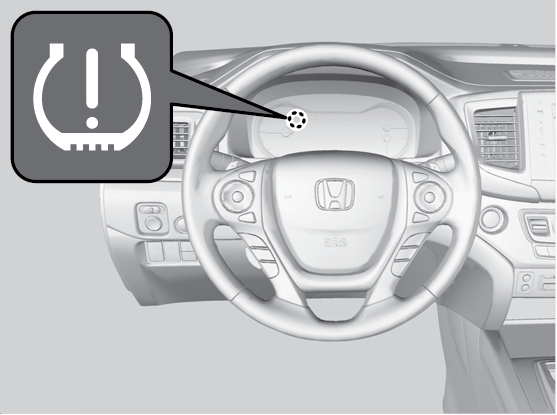
If your vehicle's tire pressure becomes significantly low, the low tire pressure indicator comes on and a message appears on the multi-information display. The specific tire with low pressure is displayed.

What to Do

Stop your vehicle in safe place. Check the tire pressure and adjust the pressure to the specified level. The specified tire pressure is on a label on the driver's doorjamb.

Tire Fill Assist

Your vehicle gives you visual and audible alerts to help you adjust the tire pressure to its appropriate level when the vehicle is on.

While inflating: The system beeps and the exterior lights flash once every 5 seconds.

When the correct pressure is reached: The system beeps and the exterior lights flash continuously for 5 seconds. Stop filling the tire.

If you overinflate: The system beeps and the exterior lights flash twice every 3 seconds.

Notice Driving on an extremely underinflated tire can cause it to overheat. An overheated tire can fail. Always inflate your tires to the specified pressure.

Tire Pressure Monitoring System (TPMS) - Required Federal Explanation

U.S. models

Each tire, including the spare (if provided), should be checked monthly when cold and inflated to the inflation pressure recommended by the vehicle manufacturer on the vehicle placard or tire inflation pressure label.

(If your vehicle has tires of a different size than the size indicated on the vehicle placard or tire inflation pressure label, you should determine the proper tire inflation pressure for those tires.)

As an added safety feature, your vehicle has been equipped with a tire pressure monitoring system (TPMS) that illuminates a low tire pressure telltale when one or more of your tires is significantly under-inflated.
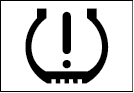
Accordingly, when the low tire pressure telltale illuminates, you should stop and check your tires as soon as possible, and inflate them to the proper pressure.

Driving on a significantly under-inflated tire causes the tire to overheat and can lead to tire failure. Under-inflation also reduces fuel efficiency and tire tread life, and may affect the vehicle's handling and stopping ability.

Please note that the TPMS is not a substitute for proper tire maintenance, and it is the driver's responsibility to maintain correct tire pressure, even if under-inflation has not reached the level to trigger illumination of the TPMS low tire pressure telltale.

Your vehicle has also been equipped with a TPMS malfunction indicator to indicate when the system is not operating properly. The TPMS malfunction indicator is combined with the low tire pressure telltale. When the system detects a malfunction, the telltale will flash for approximately one minute and then remain continuously illuminated. This sequence will continue upon subsequent vehicle start-ups as long as the malfunction exists.

When the malfunction indicator is illuminated, the system may not be able to detect or signal low tire pressure as intended.

TPMS malfunctions may occur for a variety of reasons, including the installation of replacement or alternate tires or wheels on the vehicle that prevent the TPMS from functioning properly.

Always check the TPMS malfunction telltale after replacing one or more tires or wheels on your vehicle to ensure that the replacement or alternate tires and wheels allow the TPMS to continue to function properly.
Changing a Flat Tire

If a tire goes flat while driving, grasp the steering wheel firmly and brake gradually to reduce speed. Then stop in a safe place. Replace the flat tire with the compact spare tire. Go to a dealer as soon as possible to have the full-size tire repaired or replaced.

Getting Ready to Change the Tire

Park the vehicle on a firm, level, and non-slippery surface. Apply the parking brake, shift to Park (P), and turn the vehicle off. Turn on the hazard warning lights.

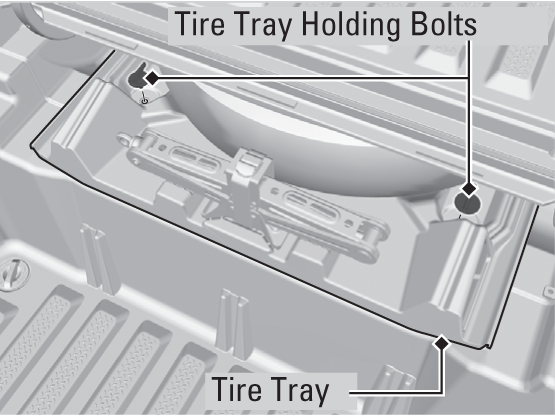
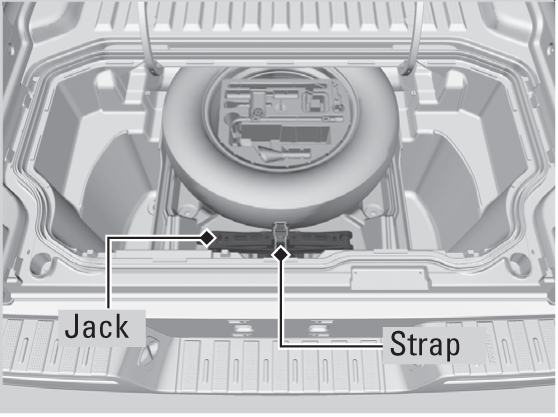
  1. Open the trunk and remove the two tray holding bolts.
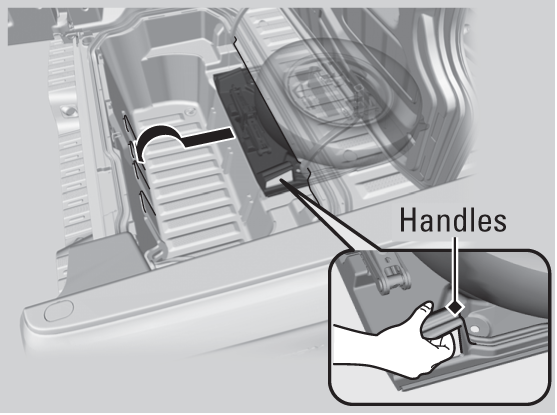
  2. Pull out the tire tray. Hook the rear of the tray to the guides on the back edge of the trunk.

  3. Loosen the strap, then take the jack out.

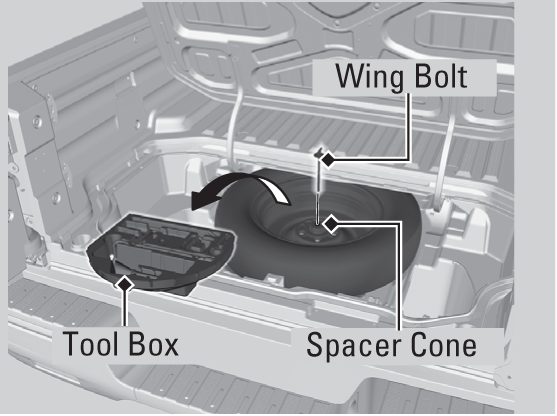
  4. Remove the wing bolt, tool box and spacer cone, then the compact spare tire.

  5. Place the compact spare tire wheel-side up under the vehicle body, near the tire that needs to be replaced.

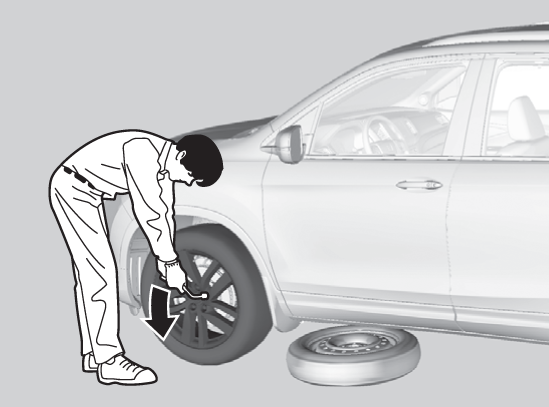
  6. Loosen each wheel nut about one turn using the wheel nut wrench.

Setting Up the Jack

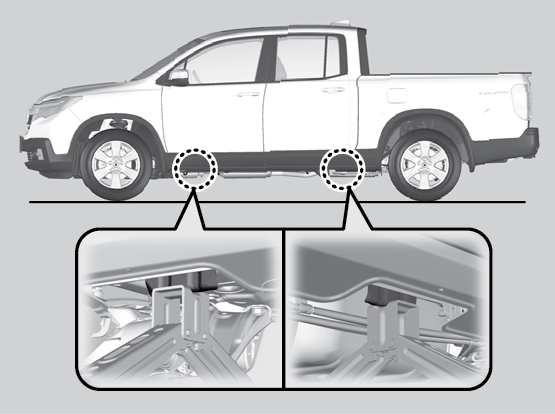
  1. Place the jack under the jacking point closest to the tire to be changed.
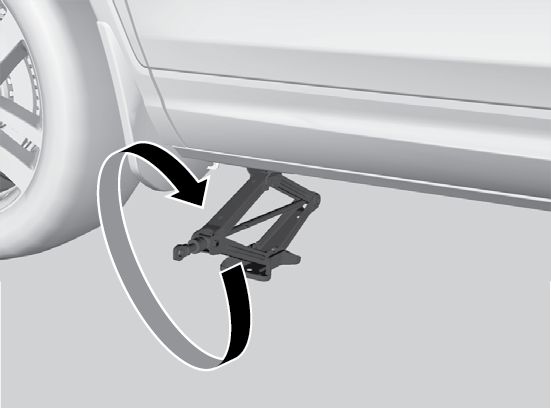
  2. Turn the end bracket clockwise (as shown in the image) until the top of the jack contacts the jacking point. Make sure that the jacking point tab is resting in the jack notch.
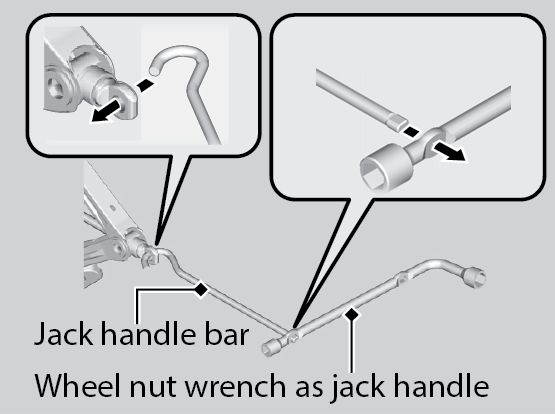
  3. Raise the vehicle, using the jack handle bar and the jack handle, until the tire is off the ground.
W

The vehicle can easily roll off the jack, seriously injuring anyone underneath.

Follow the directions for changing a tire exactly, and never get under the vehicle when it is supported only by the jack.

Notice Do not use the jack if it doesn't work properly. Call your dealer or a professional towing service.

The following instructions must be followed to use the jack safely:

  • Do not use the jack with people or luggage in the vehicle.
  • Use the jack provided in your vehicle. Other jacks may not support the weight (load) or fit the jacking point.
  • Do not use while the engine is running.
  • Use only where the ground is firm and level.
  • Use only at the jacking points.
  • Do not get in the vehicle while using the jack.
  • Do not put anything on top of or underneath the jack.

Replacing the Flat Tire

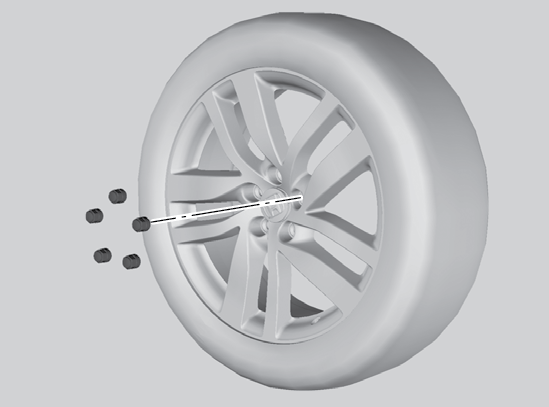
  1. Remove the wheel nuts and flat tire.
  2. Mount the compact spare tire. Replace the wheel nuts and lightly tighten them.
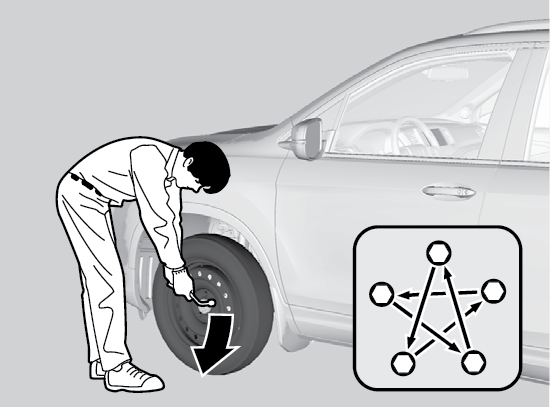
  3. Lower the vehicle and remove the jack. Tighten the wheel nuts in the order indicated in the image. Go around, tightening the nuts, two to three times in this order. Do not overtighten the wheel nuts.

If you drive with the spare tire installed, the low tire pressure/TPMS indicator appears. The indicator stays on until a regular tire is installed and the TPMS system is recalibrated.

Storing the Flat Tire

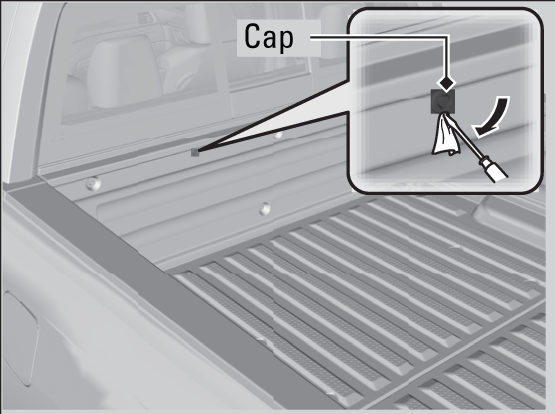
  1. Remove the cap using a cloth-wrapped, flat-tipped screwdriver.
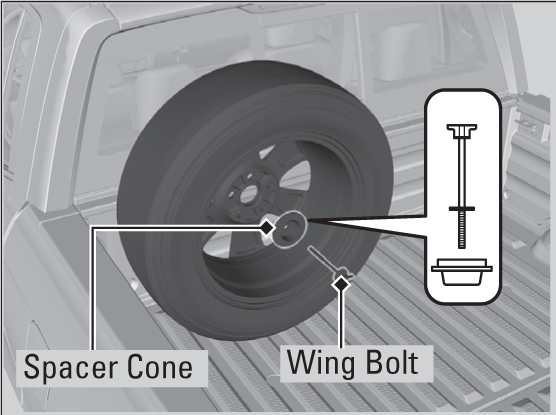
  2. Place the spacer cone on the flat tire's wheel center, then mount the wheel using the wing bolt.
  3. Store the jack in the tire tray using the strap. Close the tire tray and tighten the holding bolts.
  4. Store the center cap and tool kit in the in-bed trunk.
W
Loose items can fly around the interior in a crash and can seriously injure the occupants. Store the wheel, jack, and tools securely before driving.

Fuse Locations

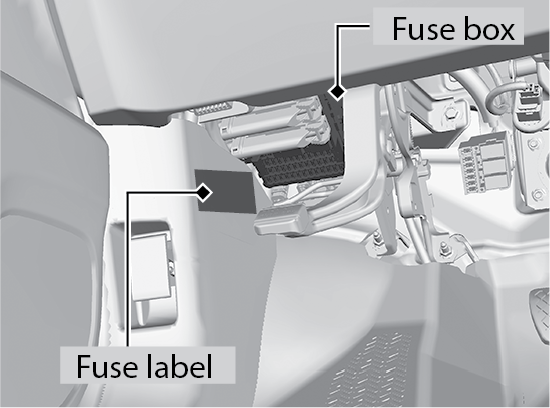
If any electrical devices are not working, turn the vehicle off and check to see if any applicable fuse is blown. Fuse locations are shown on the fuse box cover. Locate the fuse in question by the fuse number and box cover number.

Engine Compartment Fuse Boxes

Fuse Box A

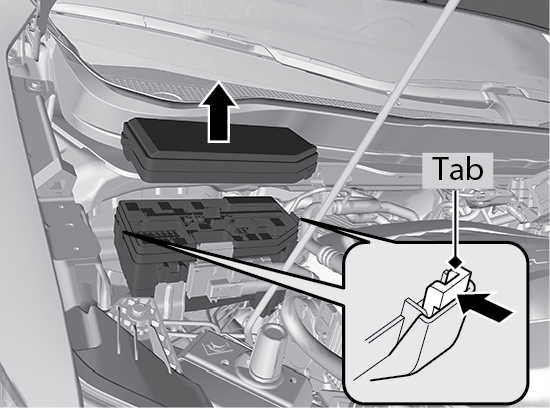
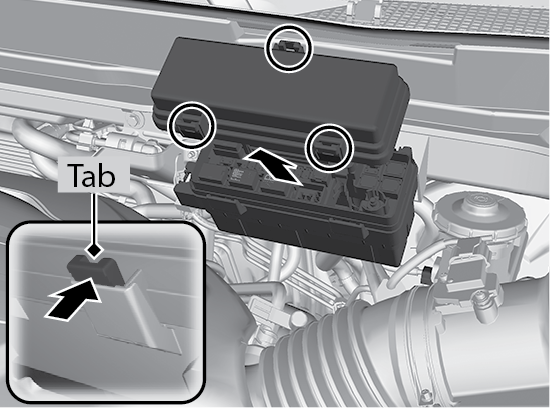
Located under the hood on the passenger's side. Push the tabs to open the box.

Fuse Box B

Located under the hood near the brake fluid reservoir. Push the tabs to open the box.

Interior Fuse Box

Located under the dashboard.

Inspecting and Changing Fuses

  1. Turn off the vehicle, including all lights and accessories.
  2. Remove the fuse box cover.
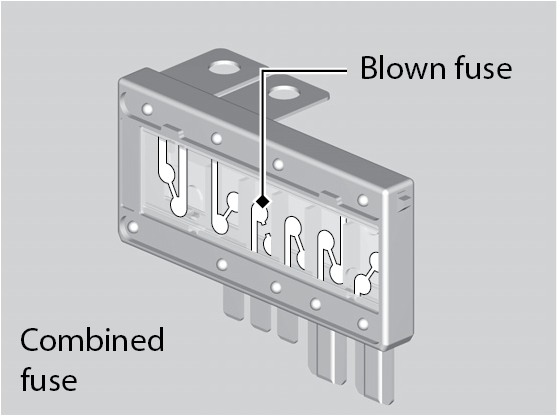
  3. Check the large fuse in the engine compartment.
  4. If the fuse is blown, use a Phillips-head screwdriver to remove the screws and replace the fuse with a new one. Reinstall the screws.
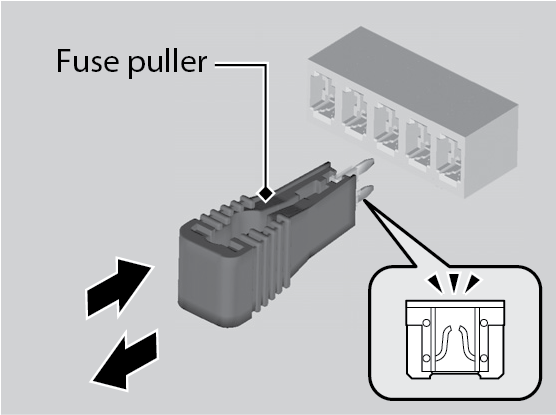
  5. Inspect the small fuses in the engine compartment and the vehicle interior.
  6. If there is a burned out fuse, remove it with the fuse puller and replace it with a new one.
Notice Replacing a fuse with one that has a higher rating greatly increases the chances of damaging the electrical system.